An Unorthodox Cleansing

I can now say that I finally understand what it must feel like to be a dandelion dancing in the wind or a piece of paper floating on water or a bird experiencing the amazing sensation of flight for the first time. It is amazing how big your own home can feel when you stop peering through a screen towards the outside world. It is amazing how important your own life becomes when you stop chasing after everyone else’s. It is an exquisite feeling to go to bed and worry about nothing but my family, my future and if I will even open my eyes the next morning. It feels like I am finally operating on the same wavelength as my life, like we are both tuned to the same melody, and it is truly divine.

Two years of a constant internal battle, a battle of wills. My will to know what is happening in everyone’s life versus my need to preserve my own life, to put all my focus on myself, on improving as a Muslim, a person, a daughter, a sister. It was me caring too much about other people while my own soul needed all the attention it could get. This is the sickness I have been trying to avoid and accept for the most part of my teenage years; the sickness of the Internet. It was not being able to go a few hours without touching my phone. It was needing to be “in the loop”. It was the crumbling of my confidence and self-security by scrolling through pictures of things I didn’t have and wanted, of experiences I never had and craved. It was torture. It was toxic. It was a ticket straight to a very unhappy and insatiable place. I only saw myself spiralling down this blackhole because of Islam, a religion that teaches you to be happy with what you have because you will one day lose it. It taught me to keep my focus on my own life, for that is how I will be most content. Of course it was right. Of course. True peace is only ever gained when you focus on you, when you place blockades on all those infiltrating thoughts and words and pictures and people.

At some point in your life, you realise how unimportant other’s opinions and thoughts become, similar to background noise that is always humming until your ears know no other silence. I believe it is circumstance that moulds the raw and moist clay of our minds to adapt to this, and even then, one cannot be completely immune. For me, many inconvenient circumstances started forcing me to place my phone down, despite the twitch in my brain that urged me to grab for it. It slowly became a habit until it became a normality. I remember questioning myself, wondering: why am I restricting myself from something that is so, so, so, so normal in this day and age, to stay “connected”? Of course, my stance wavered. I was unsure of my decisions, until I met five amazing Turkish women at my local mosque. They helped stamp a big, red “APPROVED” on my new lifestyle through my religion and faith. This one-eyed Dajjal–our phones and laptops and iPads–they are all ways of misleading us down dark and slippery paths, and I refuse to fall victim to its prying claws. Not again.

I like to think of my life as a mushy, thick sludge passing through a sieve. All the impure and toxic substances (i.e. those that are too big to pass through the mesh of the sieve) are filtered out, leaving clear, pure and golden liquid in its wake. This is me filtering those very things out of my life, out of my soul. Unsurprisingly, when I glance at this theoretical sieve, I see people, I see unhealthy attachments to materialistic things, I see hurtful words, I see long-buried resentment, I see the black putty of hatred, and worst of all, I see longing for all that I do not have yet want. But that is okay. It’s all okay because that molten gold–what is left of me–is filled with my family, my religion, healthy thoughts, contentment, gratefulness, books, a more focused mind, and most importantly: no technology.

If cutting off something so toxic is seen as abnormal in this age of ours then abnormal I shall be. Proudly, for that matter. It is sad that I had to go to such measures to finally feel such reverie (I didn’t even know I could get so lost in myself), but it was worth it. Every sacrifice, every pain, every loss. I hope that maybe sometime in the near future, I will be able to find a way to extract the healthy parts of technology without letting its poisonous vipers wrap around my heart. It is my greatest hope. But for now, I am perfectly content with this bliss that I am floating in, because I have been able to do something I never believed I could do.

And I am immensely happier because of it.
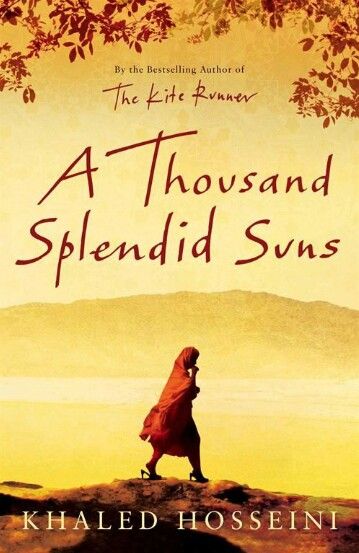
A Thousand Splendid Suns by Khaled Hosseini

Issues addressed: sisterhood, abuse of power, love, the power of human relationships, the power of womanhood, feminism

“And the past held only this wisdom: that love was a damaging mistake and its accomplice, hope, a treacherous illusion. And whenever those twin poisonous flowers began to sprout in the parched land of that field, Mariam uprooted them. She uprooted them and ditched them before they took hold.”

DISCLAIMER: this review contains spoilers!

If I could, I’d add about forty-two more quotes from A Thousand Splendid Suns to the beginning of this blog post. However, I unfortunately cannot. Spoilers and what not. (“Laila has moved on. Because in the end she knows that is all she can do. That and hope.”) Oops (I had to). A Thousand Splendid Suns by Khaled Hosseini. A Thousand Splendid Suns. A. Thousand. Splendid. Suns. A Thousand Suns that are Splendid. Allow me to describe what this book did to my heart. It A.) tore it apart in the best way possible, B.) managed to stitch my broken parts back together and C.) still leave it mismatched. That is the simplest way to describe how this book made me feel. The power Hosseini holds in his words is breathtaking. I’ve read this novel twice and analysed it to a point where I truly felt like I understood nothing about this book and everything at once, and all I can say is that words are more beautiful when Hosseini writes them. Indeed, this man opened my eyes to not only the struggle (complete understatement) Afghan women went through this past half century, but as well the power we let certain people hold in our lives.

If I have learnt anything from Mariam and Laila, it is that we have endless strength. Humans have a tendency to give up and take the easy way out instead of taking the hard, long, bumpy road. Oh, but not Mariam and Laila, no, definitely not. These women practically lived on that road of hardships, and I am truly inspired by their lack of frailty. Hosseini portrays these women as endless vessels of vigour and power despite their low stance in comparison to the men in Afghanistan. Imagine the power of Hosseini’s well-crafted words to make a reader unconsciously feel these women’s strength while they, helpless to Afghan men and the Taliban, are being beaten to within an inch of their lives and having rocks shoved down their throats simply for not preparing a meal on time? Imagine.

As I have already talked about friendships significantly in The Outsiders and Little Women, I wouldn’t want to touch too much on that aspect in this novel, even though it is one of the main pillars this book was built on. Instead, I want to focus on power. Power. What a funny word. So small, only five letters, yet so, so… powerful. Five letters, and thousands of wars are being fought, millions of lives are being lost, all because of five little letters? The sad reality of our world, readers. I wish I could lie to you and say that the way Mariam and Laila were treated in this novel was just a figment of Hosseini’s vast and creative imagination, and that in real life, women are respected and valued and loved. I wish I could.

But I cannot.

All over the world, some women are seen as objects, as a means to satisfy man’s internal hunger and then be disposed of. I never used to truly absorb this. I mean, we would see the occasional Instagram post about feminism and we would move on. But not anymore. I am in awe of these women. I loved the fact that Hosseini crafted Mariam and Laila to show significant power in the most unorthodox ways. When I say “power”, what comes to mind? Abuse. Money. Strength. Social status. Donald Trump. All bland things that are so unworthy of such an impactful word. In A Thousand Splendid Suns, however, this is what power is shown as: love, sacrifice, commitment, kindness and, most importantly, weakness. Ironic, isn’t it? Mariam and Laila silently emit the rays of their inner lioness by accepting each other for their flaws, by loving each other like mother and daughter, and even ten times stronger than that. Are you going to tell me, dear reader, that Rasheed beating Laila until she urinated blood is more powerful than Mariam humbly sacrificing her life to the Taliban so that Laila can escape with the love of her life and kids? Are you going to tell me that Mariam accepting to be stoned to death is not five times as impactful as the weasel of a man Rasheed’s vulgar display of his strength? You’d be sadly mistaken if you did.

How about Laila, a girl who barely reached twenty, sacrificing her youth and virginity to seventy-something-year old Rasheed so that her child could live comfortably? Will this be easily trampled by some stupid six figures in someone’s bank account? What has our world gotten to? How have we fallen so low that power is seen as something so corrupt and filthy and sickening?

I’m going to tell you something, reader, a top-notch secret I learnt from A Thousand Splendid Suns: Power lies within the softness of our hearts. Power is showing kindness to someone you don’t even know. Power is loving and loving and then loving again despite all the hurt and hardships in your life. Power is showing love to those who have only shown you hate. Power is being a respectful woman, power is being a respectful man. Power is not, I repeat, it is not the strength of the muscle in your arms or the wad of cash that bulges out of your pocket. It is…it is simply love. Love for people, love for nature, love for equality, love for God. Nothing bad can sprout from love.

I hope you learnt something from this post/book. If you haven’t read A Thousand Splendid Suns by Khaled Hosseini, I advise you to do so quickly. It will change your perspective on a lot of things.

Please leave any nice comments down below! Thank you for reading!

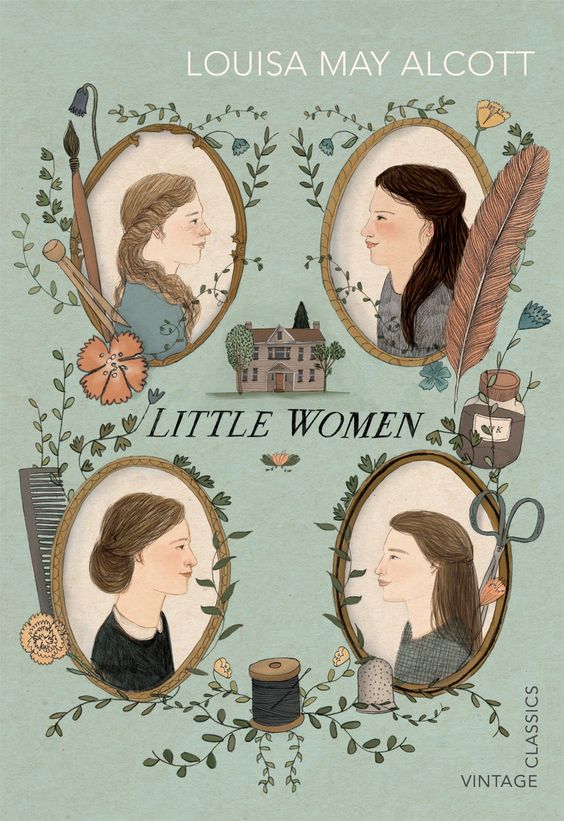
Little Women by Louisa May Alcott

credits to Readings

Issues Addressed: Feminism, sisterhood, growing up, friendship, finding yourself

“I am not afraid of storms, for I am learning how to sail my ship.”

Little Women is the best classical novel I have read yet. I kid you not, I laughed so hard over Jo and Laurie’s friendship. I have never before encountered such a joyful relationship between two people filled with tricks and silliness and purity. There’s just something about the bonds formed between sisters that make everything better. I loved this book, truly, I did. It made me cackle to myself and read lines over and over again from how much I enjoyed them. What’s more, Alcott throws in a cunning boy-next-door who fits in so perfectly with the four troublesome sisters who can’t get it right and you can just imagine the journey these ones take! We mustn’t forget, however, that Alcott was a 19th century author, and much like Oscar Wilde, she breaks our hearts in ways we would never see coming.

There is such innocence in this book that it makes me question whether a full-grown woman truly did write it. Diving into the March family’s world is different, to put mildly. In a world full of chaos and destruction every way we turn, escaping into a novel where the protagonists’ main problem is whether or not it would be “proper” to approach the boy next door is refreshing. I’d like to start off with the pure loving bonds between the sisters. They say blood is thicker than water, and I never took that into deep consideration until I read this novel. Oh, what these girls wouldn’t do for each other, their love an intricate thread connecting them, daring anyone to try and untangle it. What’s more, it’s that the bond prevails even after all their mistakes. Jo burning Meg’s hair? Amy throwing away Jo’s years of hard work into the fire? Jo approaching Laurie even after Meg told her not to?

All forgiven.

For isn’t that beauty of life? To make your mistakes and be accepted wholly for it? What is the point of holding someone’s wrongdoings against them as if we didn’t make some of our own? What’s the point in burdening a soul? Little Women deeply drilled the idea of redemption into my mind, not just for other people, but for myself as well. There’s a reason it is called the evolution of the human race and not simply the human race, for we didn’t just poof into being. We grew. We fell, we rose. Alcott shows us that. So many years later, each one of us is still struggling to fight off our inner demons, our bad habits, just like the March sisters.

Amy was terribly selfish, always wanting a taste of the luxurious side of life (something I personally resonate to). Little Amy, not even a teenager, managed to lift up her skirt and take control of her own life. She wanted to change. She wanted to be grateful. She wanted to find glee in more than just luxuries.

So that is what she did.

Our fate is in our own hands and nobody else’s. If you want to become a better version of yourself, what’s holding you back? If Louisa May Alcott could gather the courage to write a novel in the 19th century following a girl who wanted to be a boy and work and protect her family, then tell me, reader, what is holding you back? We are ornate beings, much like Meg, Jo, Beth and Amy, except it’s become so much more harder to improve due to our constantly changing world. If Jo could get her book published in such an anti-feminist era, what’s stopping you from ploughing that mountain you placed between you and who you want to be?

Not to get too philosophical, but I deeply believe this was the purpose of Alcott’s novel, other than, of course, emphasising on the equality between men and women. I trust Alcott wanted us to learn from these young girls, to see little women learning to compromise and improve and look back at ourselves and think, really? What am I doing with my life? An ancient Burn Book in disguise.

I thoroughly enjoyed reading the first novel in Alcott’s series. It widened my eyes and my heart to accept everyone around me as they are. Who am I to judge when I have made so many mistakes myself? Who? What superpower do I have that allows me to view the inner turmoils of other people, to see what they try so hard to improve on behind their walls? The honest answer is none.

Thank you for reading! I wish everyone could embrace this as much as I have.

Have any comments? Leave them down below!

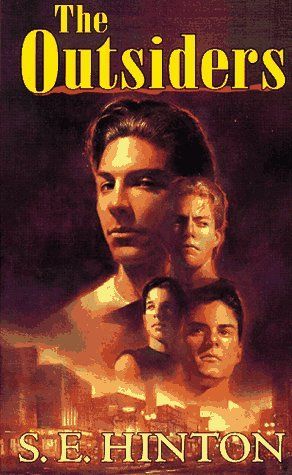
The Outsiders by S.E. Hinton

Copyrights go to artofmanliness

Issues Addressed: friendship, gangs, social discrimination, death

Disclaimer: This review contains spoilers!

“It seemed funny to me that the sunset she saw from her patio and the one I saw from the back steps was the same one. Maybe the two different worlds we lived in weren’t so different. We saw the same sunset.”-Ponyboy Curtis

This book. Where do I start with this book? Maybe by mentioning that it was written by a seventeen year-old girl? That was what made it all the more attractive to me, that a girl my age could create a brotherhood of boys so broken yet full. Of love so wrongly missing in places yet existing in abundance in others. Although a much lighter read compared to All the Bright Places, very heavy issues are still addressed. While reading, all I could think about was how different yet similar that world is to mine. The Outsiders was published over half a century ago. That’s fifty-five years to be exact. Can you imagine? Fifty-five years, yet teenagers everywhere are still struggling to find their identity, to figure out who they are, to fight bullying and preset images. Ponyboy Curtis’s world is no different than mine, yet I haven’t experienced an ounce of what he had. I can only describe this as the magic of books, the power to make you live an infinite number of lives in a finite one.

Other than the seriously creative names, the brotherhood between the six gang members Sodapop, Dally, Two-Bit, Johnny, Steve and Darry is one of the most intricate and serene friendships I’ve read about. There’s such unconditional love brewing between these boys that it makes you question the legitimacy of bonds formed in your own life. Dally was a cold-hearted fox, hardened by the unaccepting society that encased him, and at the ripe age of seventeen, he had seen too much to have any faith in what good remained in the world. I find that so heartbreaking, that he had to hide all this compassion and soul because the widely accepted socialites, also known as Socs, made him that way. The Socs saw a gang member, a boy who smoked cigarettes and put on too much hair grease for his own good. The Socs saw a runaway, a homeless kid who robbed stores and carried around a gun.

But that wasn’t him.

Dally was the boy who risked his life to save Johnny, a sixteen year-old abused relentlessly by both parents, from a burning church. Dally is the one who threw himself into the arms of death because he couldn’t live without Johnny, whom he secretly loved like a brother. There are so many examples of preset images and strong relationships in such a short book that it scares me.

How about The Curtis brothers? Sodapop, Darry and Ponyboy? They’re all such contrasting forces, bound by blood and endless love, even after the death of their parents. There is nothing they wouldn’t do for each other, and I love that. I love that this was published fifty-five years ago, and yet there are so many lessons that we can still learn from it. This book taught me that love binds people as family more than blood does. These boys were a family, all six of them. It was so raw and pure and realistic, the struggles they all faced because they were at the bottom of the social ladder (Greasers). Everybody judged them because of what they didn’t have. Money. Cars. Parents. This encased each of the boys in caged cells, walls that prevented them from chasing their dreams, from pursuing an education beyond High School, from being a football star. They were labelled as misfits, and just because of how they looked. But this wrongdoing goes both ways. Ponyboy unfairly assumed all Socs had it easy because they were rich, when in reality, they were fighting for their parents’ attention, or screaming at the top of their lungs to be heard, to be punished, to be treated like a human. This all fell on deaf ears, per usual.

Fifty-five years, and yet humans are still judging people, for lesser things than social status. People are being judged because of the colour of their skin. Aren’t we supposed to evolve? Isn’t it human nature to learn from the mistakes of our past? Shouldn’t racism and discrimination be something of the past? So, why is this still an issue? Why can’t we accept people for who they are? If the Socs understood that the Greasers were more than just their personal punching bags, maybe Johnny wouldn’t have died and Dally would be alive, chasing good instead of trouble. Maybe Ponyboy could think about college instead of how to defend himself against Socs with a switchblade.

A lot of things could be different if only humans dropped this predetermined idea that people are only what you see or hear. That we are nothing more than a flat surface with no edges or sides or angles.

We couldn’t be more wrong.

Each person is three-dimensional; you can never see them fully if you’re standing in one place. You must move to see their different sides, you must take initiative to get to know them before you judge them on the one out of a billion sides you could see. This is what I learnt from The Outsiders, that we are three-dimensional, and that nothing is truly as it seems.

Thank you for reading! Please leave any ideas or comments below!

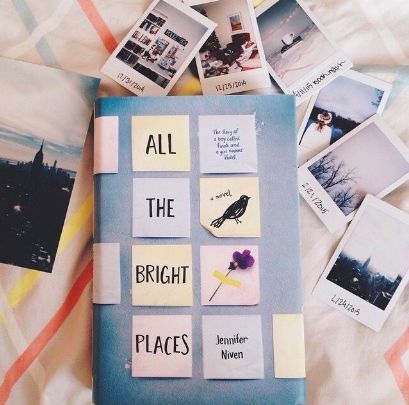
All the Bright Places by Jennifer Niven

Copyright goes to i.pinimg.com

Issues addressed: Suicide, mental illnesses (specifically bipolar disorder and depression), bullying.

“The fact is, I was sick, but not in an easily explained flu kind of way. It’s my experience that people are a lot more sympathetic if they can see you hurting, and for the millionth time in my life I wish for measles or smallpox or some other recognisable disease just to make it simple for me and also for them.”- Theodore Finch.

I have read this book many, many times, but for a particular reason, I only just understood the painful depths of this story, the truth behind the words Niven had written so flawlessly. Theodore Finch was a free spirit, born to an abusive father and mother that couldn’t find it in herself to care for her children. He was a candle flame snuffed out by the cruelty of those that surrounded him. Throughout the novel, Finch refers to himself as being “awake” and wanting to stay that way, to “not go back to sleep” for he fears he might never wake up again. Of course, Jennifer Niven didn’t mean this in the literal sense, however, she does hauntingly (and accurately) describe what people with bipolar disorder feel like when they’re hyperactive and when they’re depressed in just two words: “awake” and “asleep”. How amazing is that? In two words, I finally understand what it must be like to be bipolar. In two words, I’m slipping into Theodore’s skin, I’m clawing my way out of the hole his mind has dug for him, I’m itching for someone to see he needs help… but nobody did.

Niven addresses many causes with regards to why people’s mental health might deplete. Firstly, there’s home life. Theodore was abused, (by his own father no less), received no real affection from his mother, a woman who was supposed to unconditionally supply him with love and warmth and joy, and was bullied. Relentlessly. Mocked and ridiculed, all for what? Because he was different. Because he saw the world in a light his schoolmates couldn’t even begin to fathom. All these factors pushed Finch into a neat little box inside his mind, made him constantly think of different ways he could kill himself until he finally did. As if that wasn’t enough heartache, Niven also sheds some light on schools and their regards for counsellors and mental health. Like Finch said, they’re only sympathetic to illnesses they can see.

It’s a personal preference of mine to relate what I read to what I experience, and this hit too close to home. Mental health is squeezed into a narrow range of stress and anxiety (especially by secondary educational institutions) when it’s so much more complex than that. As someone who hasn’t had defining brushes with mental health, it shatters me to imagine that some people have to enfold themselves around their burdens like a gift wrapper around a gift. They have to walk and talk and smile like they aren’t carrying the world on their shoulders. What’s shocking is that nobody can see, nobody knows what they’re encasing in that neat little box. They’ve been ignored for so long that they just know how to keep their pain hidden and out of sight.

If that doesn’t break your heart, I don’t know what will.

What I loved the most about this book was how Niven showed us the two ways you could save someone drowning in themselves through characters Violet and Finch. Violet, surrounded by loving parents, friends who looked out for her, and Theodore, who helped her climb the wall of fears she encased herself in after her sister died in a car accident. She slowly clawed her way out of that darkness Finch could only bathe in because people around her cared. Because of kindness, the light that shines through blinding darkness, the hand that reaches out to you when you’re drowning.

It’s extremely daunting and scary being in Theodore’s mind. As a reader, connecting with Theodore and feeling his pain had to be by far the most beautiful misfortune I’ve had the pleasure of reading. We get a peek into the mind of a person with bipolar disorder, we see, we feel his highs slowly fall down this endless spiral until he wants nothing but his life to end. I remember reading the novel and feeling myself convulse, shaking at the reality of this because people are out there living exactly like Finch. People out in this world are suffering and many of us remain undisturbed, unknowing to their inner turmoil because we refuse to look, to listen. Reading All the Bright Places has awoken me to the world around me. I am more careful of what I say to people, I worry that the people surrounding me feel like they’re drowning, drowning in the depths of their mind and believe nobody can help them.

I learn from books. I learnt from this book. I hope you will too.

Every word counts. Every action counts.

Please leave your comments and ideas below! What did you learn from this book?

Design a site like this with WordPress.com
Get started